


Page 39 - VHSA - Onderstepoort 100 Years - Part 1
P. 39
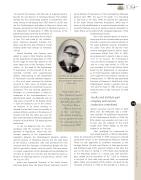
The head of the Division, with the rank of a deputy director, became the new Director of Veterinary Services. The Institute thereby lost the commanding position in government vete- rinary services it had enjoyed since 1927 when P.J. du Toit was the first Onderstepoort incumbent of that post. Jansen was, however, promoted to Chief Director of Veterinary Services in the Department of Agriculture in 1968, the structure of the Department being such that the Director of
Veterinary Services once again had to report to him. The new head of the Onderste- poort Veterinary Research Institute, K.E. Weiss, now bore the title of Director of that Institute rather than Director of Veterinary Services.
Animal Breeding and Dairying were added to Jansen’s Chief Director portfolio by the Department of Agriculture in 1974. At this stage he had been placed on the same salary scale as the Secretary of Agri- culture, i.e. the head of the Department of Agriculture, on the strength of his out- standing scientific and organizational abilities. Restructuring of the Department of Agriculture occurred relatively frequent- ly. One such event involving the Institute occurred in 1961 when an attempt was made to terminate its involvement in vaccine production. This was strongly opposed by Alexander in a memorandum in which he responded to the recommendations in a departmental report. As Alexander was on long leave it was left to his deputy Jansen to state the Institute’s case to the commit- tee involved. In his verbal evidence he stressed the fact that it was not possible to produce effective vaccines in the absence of research and that the status quo was the best under the existing veterinary manpower situation in South Africa. The status quo was maintained.
ONDERSTEPOORT 100
by the Minister of Agriculture in 1961 and held this influential position until 1987, the year of his death. It is interesting to note that in the early 1970s he ignored the opposition of the South African Veterinary Association, which was in favour of the establishment of a second veterinary faculty in a successful farming area at an existing university elsewhere in South Africa, as he preferred the envisaged expansion of the
Onderstepoort Faculty.
One of the unique features of Jansen’s
career was that he continued doing original scientific research and remained abreast of the latest published research throughout his career, even when he had the most onerous managerial tasks to fulfil as senior government official from 1961 to 1978. He endeavoured to devote 2 days in every week to his research. His determination was such that he managed to achieve this goal to a very large extent. In 1978 he was seconded to the South African Wool Board by the Department of Agriculture as its Chief Researcher. Laboratory facilities were supplied by the research institute at Onderstepoort. In 1980 he was appointed Professor of Diseases of Small Stock at the Onderstepoort Faculty, a position that he held until his death in 1987 when he was nearly 66 years of age. Like Quin, he died in office.
Faculty and Institute part
company and vaccine
production centralized 39
Jansen’s successor was K.E. (Gene or Karl) Weiss who, like Alexander, was a world- class virologist. He qualified as veterinarian at the Onderstepoort Faculty in 1943. His BVSc-degree was awarded cum laude and he was also the recipient of the much sought after Theiler Medal as the best student in his final year.
“From 1958-1972 Weiss conducted research in virology, especially on Rift Valley fever (RVF), Wesselsbron disease
– a disease discovered by him – and lumpy skin disease, developing vaccines against the latter two and improving the existing one for RVF.”
As can be deduced from his corres-
pondence with the Secretary of the De-
partment of Agriculture, Jansen was also
strongly opposed to the organizational
separation between the Onderstepoort Research Institute and the Division of Veterinary Services, but the then head of the Division, Lambrechts, who had promoted the new structure with the Secretary of Agriculture despite the fact that he reported to Jansen, won the round. The main reason for Jansen’s opposition to this development was probably the fact that he would loose his title and international status as Director of Veterinary Services of South Africa, which in fact did occur in 1962.
Jansen was appointed Chairman of the South African Veterinary Board (now the South African Veterinary Council)
After qualifying he commenced his own private practice in 1944 in Standerton where he remained until 1948. In 1949, however, he entered government service at the Onderstepoort Research Institute where he was appointed as veterinary researcher in the Virology Section. De Kock was Director of Veterinary Services and therefore head of the research institute at the time, but was on the point of retiring. In 1951 Weiss was transferred to the Physiology Section in a vacant part time lecturer’s post created by the promotion of R.C. Clark to Professor in the post of Quin who had recently died, as mentioned above. Weiss was awarded a DVSc degree cum laude by the University of Pretoria in 1953 on the strength of a thesis on
Consolidation of core functions ( 1961-1980)
1908-2008
Years


