


Page 56 - VHSA - Onderstepoort 100 Years - Part 1
P. 56
ONDERSTEPOORT 100
• Implementation of more effective employment equity, taking into account that the need to employ more scientists from previously disadvantaged groups must be balanced by the need to maintain the ability to bid successfully for research contracts that require experienced scientists with an established track record
• Improvement of technology transfer, training and other support services for the benefit of small scale developing farmers
• Increased sales of commercial products, e.g. vaccines
• Exploitation of land and other under-
utilized assets of the ARC-OVI. Regrettably Thomson accepted a position at the FAO before these goals could be fully achieved. His interest in the control of epizootic diseases in Africa remained, however, since he was seconded for 4 years by the FAO to the European Union-funded Pan-African Programme for the control of Epizootics (PACE), based in Nairobi, after which he established a consulting company based in South Africa.
In 2001 S.T. (Steve) Cornelius was trans- ferred from the National Department of Agriculture as the new Director of the ARC-OVI. After obtaining a BSc (Hons) in Physiology at the University of the Witwatersrand, Cornelius qualified cum laude as a veterinarian at Medunsa in 1991. From 1992 to 1997 he was employed by Medunsa, first as senior lecturer in veterinary toxicology and then as Associate
56 Professor and head of their Department of Veterinary Physiology. In 1998 he was appointed as Deputy Director-General of the National Department of Agriculture, responsible for policy development and strategic management of various chief directorates, including veterinary services.
As part of the restructuring and transformation of the ARC, the four institutes involved in animal research were clustered together in an ARC Livestock Business Division (LBD). Cornelius was promoted in 2002 to head this division at ARC Head Office until 2004 when he transferred to the Gauteng Provincial Government as head of their Department of Agriculture, Conservation and Environment.
F.T. (Fred) Potgieter was appointed in his place as acting Director of the ARC-OVI, a position he filled until 2004 when major changes at senior management level of the
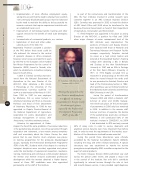
“During the period that he was Director much emphasis was placed on training programmes for the previously disadvantaged groups, especially the Professional Development Programme (PDP) of the ARC.”
ARC institutes were implemented. The positions of Director and Deputy Director were replaced with those of Research and Technology Manager and Research Facility manager respectively. Potgieter started his career as a high school teacher and lectured at the Goudstad Teacher’s Training College after obtaining a BSc in Botany and Zoology at the then Potchefstroom University in 1967 and an MSc in Zoology at the then Rand Afrikaans University in 1971. In 1972 Bigalke recruited him as researcher in protozoology at the then VRI where he moved through the ranks until he was promoted to Assistant Director and head of the Protozoology Section in 1982, after spending a year as Visiting Scientist at the Oklahoma State University and the Texas A&M University in the USA.
During the period of transformation between 2000 and 2004 a dramatic staff turnover at senior and middle manage- ment level took place. Of the 20 managers of programmes in 2000 only four remained in 2004. In addition to the massive staff turnover and loss of expertise the decline of the parliamentary grant also continued. Whereas it still constituted 50% of the Institute’s budget in 2000/2001, by 2004 it had diminished to 40% and only covered
Following his appointment at Onder-
stepoort he faced the same problems of successive reductions in the parliamentary allocation, loss of key personnel through resignation and retirement, a low morale among remaining staff and uncertainty about the future. During the short period that he was Director much emphasis was placed on training programmes for the previously disadvantaged groups, especially the Professional Development Programme (PDP) of the ARC. Students with a first degree in a variety of biological disciplines were recruited, appointed and placed under the mentorship of experienced researchers. Guidance, training, monitoring and continuous communication between the mentor and mentee ensured accelerated professional development while the mentee obtained a higher degree. Several of these PDP candidates were later appointed permanently on the staff of the Institute.
66% of salary costs. In order to survive, diagnostic and analytical services became even more important than before and, in order to meet the requirements of the market, accre- ditation of the laboratories involved became essential.
During this period three laboratories were officially accredited by the National Accreditation System (SANAS), including the drug and other residues laboratory. A special laboratory was also established to handle the bovine spongiform encephalopathy (BSE) surveillance required for the export of animal products.
The Exotic Diseases Division (EDD) performed very well during the period under review and played a major role in the survival of the Institute. Not only did it contribute significantly to external income through the sale of foot and mouth disease vaccine, it also provided rapid diagnoses
PART 1
Onderstepoort Veterinary Institute: General History
1908-2008
Years


