


Page 47 - VHSA - Onderstepoort 100 Years - Part 1
P. 47
from 1980 facilitated the development
of the necessary technology for typing
virus isolates obtained from wild animals.
G.R. (Gavin) Thomson and his co-workers
showed that overt FMD in the KNP occurred
most commonly in the impalas and that SAT
1, SAT 2 and SAT 3 strains were involved.
The question, however, was: how did the
impalas get infected? The role of African
buffaloes, known to be healthy carriers of
the virus and long thought to be the most
important source of infection for other
animals and thus the source of new out-
breaks, in the epidemiology of the disease
was investigated. Genome sequencing
studies showed that buffaloes are the usual
source of infection for impalas, which are
not persistently infected. Young buffaloes contract the infec- tion from carrier animals, such as their dams, when colostral immunity starts to wane at 2-4 months of age with the result that minor epidemics of subclinical infection occur in breeding herds. It is at this time that such herds are probably a source of infection for other susceptible species such as impalas or even cattle.
ONDERSTEPOORT 100
The new redwater vaccine developed by A.J. de Vos in 1973, consisting of blood drawn from acutely infected, sple- nectomized calves, was a chilled product containing a standardized number of the two Babesia species (B. bigemina and B. bovis) responsible for the disease in South Africa. This vaccine was further improved in the 1980s and eventually replaced by D.T. De Waal and M.P. Combrink in 1998 with standardized, frozen, separate B. bigemina and B. bovis vaccines.
Contrary to the finding published by Theiler many years ago, F.T. Potgieter showed that transovarial transmission of Anaplasma marginale in the one-host ticks Boophilus decoloratus and Boophilus
microplus, does not occur. Transstadial and intra-stadial transmission are, however, possible. It is therefore clear that these ticks move from one animal to another much more frequently than their one-host life cycle status suggests. He furthermore showed that Rhipicephalus simus, R. evertsi evertsi and Hyalomma marginatum rufipes are capable of transmitting the infection (see also Part 3: Protozoology).
“Equine influenza was unknown in South Africa until 1986 when it was introduced from overseas and adversely affected the horse racing industry. The technology used to produce an inactivated vaccine was due to the foresight of B.J. Erasmus.”
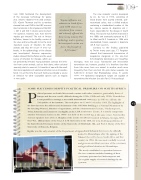
Political pressure on South Africa made contact with other countries, particularly those of Europe and the new world, difficult during the 1970s, 1980s and early 1990s. Nonetheless it was possible to arrange a successful international conference in 1983 to celebrate the 75th jubilee of the Institute. This took place on 12 and 13 October 1983. The highlights of the first day were the address and declaration of the Old Main Building as a National Monument by Mr Greyling Wentzel, Minister of Agriculture, and the commemorative lecture, ‘Onderstepoort, Today, Yesterday and Tomorrow’ by Bigalke in the CSIR Conference Centre. A scientific symposium entitled ‘Veterinary Science in the 1980s’ was held on the second day at the same venue. Noteworthy overseas speakers were Dr F.A. Murphy of the Centre for Disease Control in Atlanta, Georgia, USA, Prof W.L. (Bill) Jenkins of the Texas A & M University in the USA, Dr C.G.D. (Duncan) Brown of the Easterbrook Veterinary Centre of the University of Edinburgh, UK, and Prof A. Burny of the Free University of Brussels, Belguim.
Bigalke was the only scientist of the Department of Agricultural Technical Services to be officially invited to Mozambique after the signing of the
Nkomati Accord between South Africa and that country in 1984. He was most cordially received
and given an excellent overview of the veterinary and agricultural situation in Mozambique.
The newly established co-operation between the two countries included training of their veterinary personnel at Onderstepoort and
the regular supply of research findings by the Institute.
47
Diversification and change (1980-1998)
1908-2008
Years


