


Page 49 - VHSA - Onderstepoort 100 Years - Part 1
P. 49
make use of the limited departmental funds that were allocated for this purpose. He also promoted further training of his research leaders in administrative capacities, such as public speaking, including appearing on television that had been introduced into South Africa shortly before he took office. He undertook several television inter- views himself to enhance the image of the Institute, especially to accentuate its continuing involvement with those African countries that purchased its vaccines.
Predecessors of the Onderstepoort Jour-
nal of Veterinary Research existed even
before 1908 when the Institute was estab-
lished. The journal has had a variety of
names since its inception, the first being
the Report of the Government Veterina-
ry Bacteriologist, Transvaal, which first
appeared in 1903. As editor of this official
publication of the Institute, Bigalke had
two main objectives: to attract the best quality refereed or peer-reviewed papers that were available in South Africa and elsewhere – the latter being a difficult aim under the existing political ostracism of South Africa, and to get the Journal, which is published quarterly, to appear on schedule, a requirement that had been neglected from the 1950s
to the early 1970s when he had first been
made responsible for its administration.
He also appointed the first language edi-
tor of the Journal, A.J. Morren, on a
part time basis. These measures not only
increased the circulation of the journal, but
also benefited the Onderstepoort library’s
existing exchange programme with several
international journals.
A change in status and
corporate culture
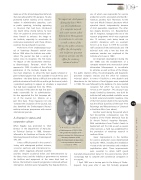
When Bigalke was promoted to Chief Director in the Department of Agricultu- ral Technical Services in 1988, Verwoerd followed in his footsteps as Director of the Veterinary Research Institute, Onderstepoort (VRI, OP).
It was a difficult period in the country’s
history with widespread political violence,
economic sanctions and international iso-
lation which negatively affected scientific
activities. Despite occasional strikes and demonstrations by the labour force and the inability of government to maintain the facilities and equipment at the same high level as before, the Institute’s research programme continued without interruption. Activities were managed by four deputy directors,
ONDERSTEPOORT 100
one of whom was responsible for vaccine production and its associated activities (B.J. Erasmus), another, (G.R. Thomson), for the Foot and Mouth Disease Laboratory which operated almost independently because of strict quarantine regulations. The other two deputy directors, J.D. Bezuidenhout and F.T. Potgieter, managed the rest of the research programme which was organized into 12 sections, each being based on scientific disciplines with an assistant director at its head. In 1989 the scientific staff consisted of 84 professionals and 178 technical staff, only a few less than the maximum number ever employed at the Institute which was in 1983.
An important development during the late 1980s was the establishment of a computer network and a new section called Information Management to co-ordinate its activities as well as those of the library,
the public relations office, the photography and diagnostic specimen reception sections and the office for statutory technical advice. In terms of facilities a new abattoir and laboratories for the Section of Food Hygiene were completed in 1989. This was followed by the building of a long needed
recreation hall which has since become
known as the ‘Grasdak’. This structure was
largely funded by donations, was built by institute staff and provided a suitable venue
for both social and scientific meetings. One
of the first functions held in this new facility
was the official launching of the book Plant 49 Poisonings and Mycotoxicoses of Livestock
in Southern Africa (see above).
Another event during this period which
had far-reaching consequences was the founding of the Theiler Memorial Trust by Sir Arnold Theiler’s daughter Margaret. With contributions from Theiler’s family in Switzerland and the USA as well as several other sponsors, a fund was established for the promotion of veterinary research in southern Africa.
Major improvements in the facilities for vaccine production were implemented during the 1990s, including the installation of state of the art fermentors and a modern lyophilization plant. These improvements were essential to attain GMP (good
manufacturing practice) status for the vaccine factory, which increasingly had to compete with commercial companies in the market.
1 April 1992 was a turning point in the history of Onder- stepoort. Forty years after it was first formally proposed
“An important development during the late 1980s was the establishment
of a computer network and a new section called Information Management to coordinate its activities as well as those of the library, the public relations office, the photography and diagnostic specimen reception sections and the office for statutory technical advice.”
Diversification and change (1980-1998)
1908-2008
Years


